Names Around the World
How this spice is known in major languages
Botanical Information
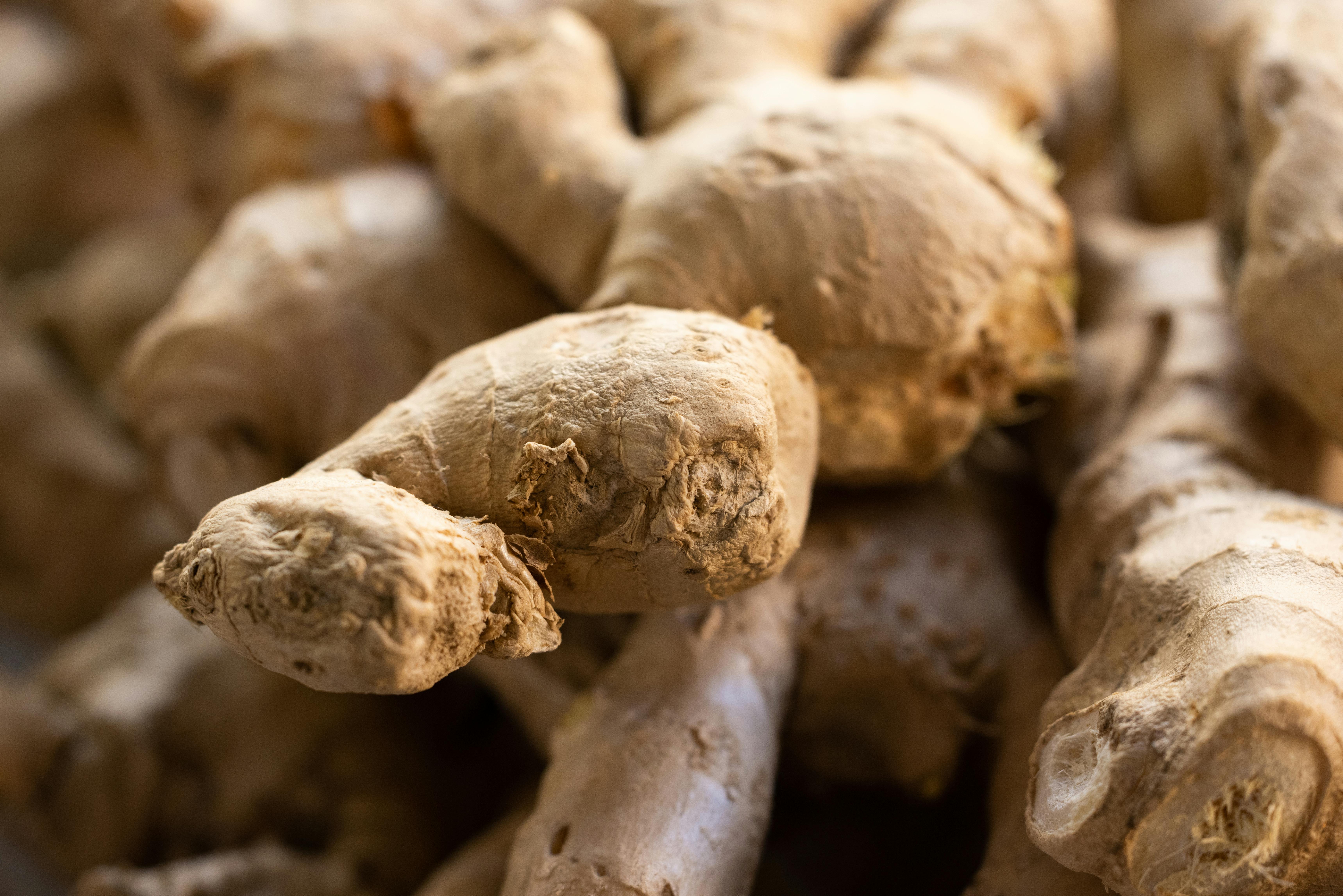
Ginger is the underground rhizome of Zingiber officinale, a flowering plant in the ginger family. Plants grow ~1m tall with narrow lance-shaped leaves and pale yellow-purple flowers. The rhizome — knobby, beige-skinned, pale-yellow inside — is what we eat. Its active compounds are gingerol (fresh) and shogaol (dried).
Origin & History
Native to Maritime Southeast Asia, cultivated for over 5,000 years. Carried by Austronesian sailors across the Pacific, then via India through Arab trade to Rome by 1st century. The first spice imported to Europe in significant quantity.
Nutritional Profile
Per 100g
Key nutrients: Active gingerols and shogaols, vitamin C, magnesium, potassium, manganese.
Evidence-Based Health Benefits
1g fresh ginger daily reduces morning sickness, motion sickness, and chemotherapy nausea — confirmed in dozens of trials.
Gingerol reduces inflammation markers in arthritis and exercise-induced soreness.
Speeds gastric emptying and stimulates digestive juices.
2g/day for 12 weeks reduced fasting glucose 12% in type 2 diabetics.
Studies show ginger matches ibuprofen for primary dysmenorrhea.
Ardraka (fresh) and Shunti (dried) are slightly different in Ayurveda. Pungent (Katu), heating (Ushna). Balances Vata and Kapha. Called 'Vishwabheshaja' — universal medicine. Used for nearly all digestive complaints, colds, and respiratory issues.
Recipes Featuring This Spice
Sliced fresh ginger simmered with honey and lemon — cold remedy.
Classic spiced cookies with molasses, ginger, cinnamon, clove.
Fast Asian-style vegetables with fresh ginger, garlic, and soy.
Safety & Precautions
1-3g daily (fresh), or 250-500mg of ginger extract.
Heartburn or mild GI upset at high doses. May lower blood pressure too far. Generally very safe.
Blood thinners (additive — slows clotting). Blood pressure and diabetes medications.
Storage & Buying Guide
Fresh: 3 weeks in fridge, 6 months frozen (peel and freeze whole or grated). Ground: 6 months airtight.
Pick firm, heavy roots with taut, smooth, shiny skin. Avoid wrinkled or moldy pieces. Young ginger has pale pink shoots, mild flavor; mature ginger has thicker skin and stronger heat.
Did You Know?
Ginger was so valued in medieval England that 1 pound of ginger cost the same as a sheep.
China and India produce over half of the world's ginger.
Ginger ale was created in 1851 in Ireland as a stomach-soothing drink.
Confucius reportedly ate ginger with every meal.
Frequently Asked Questions
Fresh vs dried ginger — which is better?
Fresh has more gingerol (sharper, anti-nausea); dried has more shogaol (warmer, better for joints). Both are healthy.
Can pregnant women have ginger?
Yes — up to 1g/day fresh ginger is considered safe and effective for morning sickness.
Does ginger ale help nausea?
Only if it contains real ginger (many commercial brands don't). Read labels.
Related Spices
Community Reviews
Share your Ginger experience
Loading reviews...