Names Around the World
How this spice is known in major languages
Botanical Information
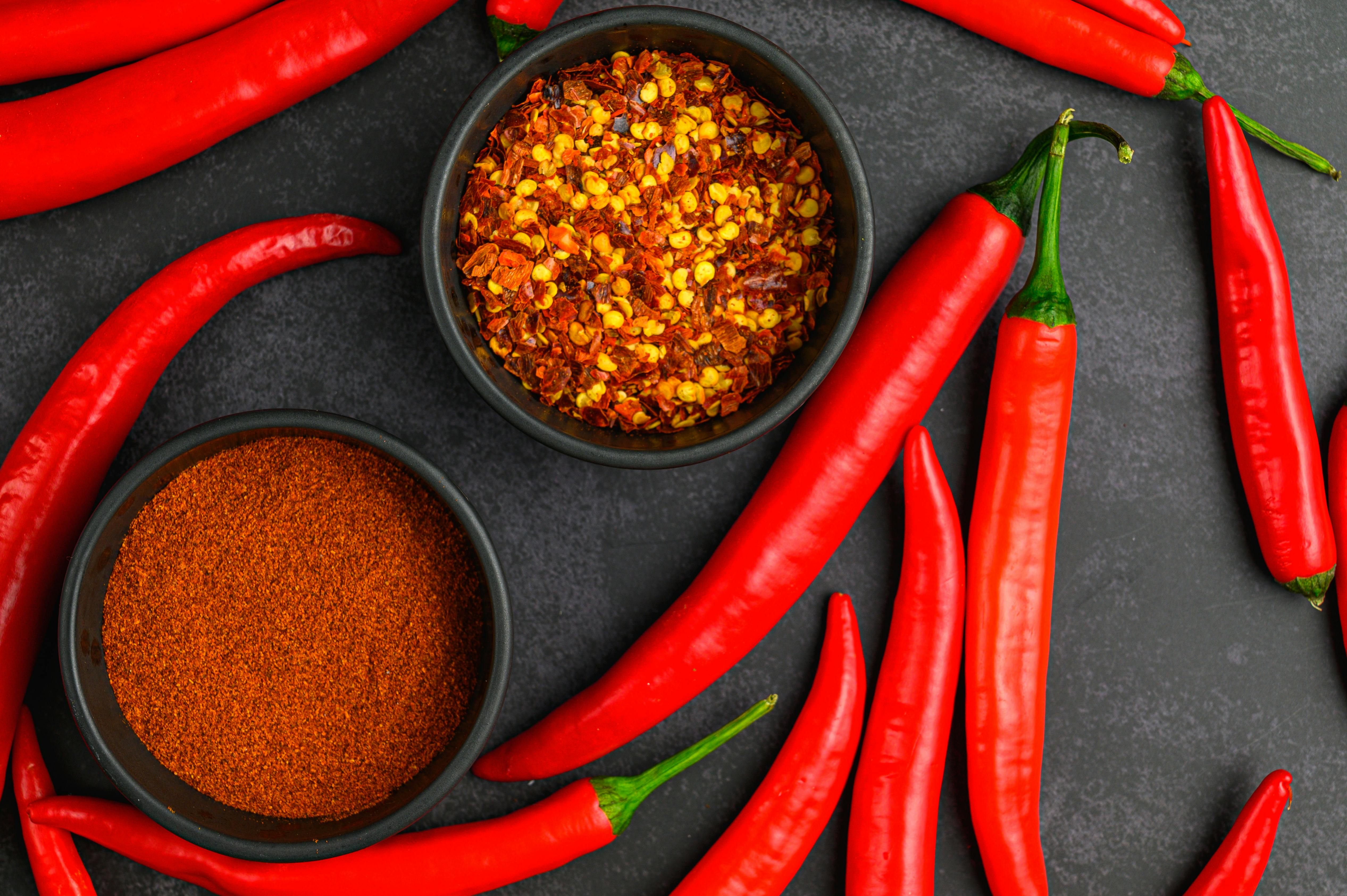
Chili peppers are the fruit of Capsicum species — annuum (most common: cayenne, jalapeño), chinense (habanero, ghost), frutescens (Tabasco, Thai), pubescens (rocoto). Heat comes from capsaicin, concentrated in the placental membrane (white ribs).
Origin & History
Domesticated in Mexico ~6,000 years ago. Brought to Europe by Columbus in 1493, then Portuguese spread chilies to India and East Asia, where they revolutionized cuisine within a century. India today produces 36% of world chilies.
Nutritional Profile
Per 100g
Key nutrients: Capsaicin, vitamin C (very high in fresh), A, B6, K, and potassium.
Evidence-Based Health Benefits
Capsaicin increases thermogenesis and fat oxidation — chili eaters burn 50 extra calories/day on average.
Capsaicin creams are FDA-approved for arthritis, neuropathy, and post-surgical nerve pain.
Regular chili consumption linked to 25% lower all-cause mortality in long-term studies.
Capsaicin signals satiety; small amounts before meals reduce calorie intake.
Capsaicin inhibits foodborne bacteria — may explain why hot cuisines emerged near the equator.
Lal Mirchi is heating, pungent. Balances Kapha but aggravates Pitta strongly. Should be used moderately by those of Pitta constitution. Used to stimulate digestion and clear sinuses.
Recipes Featuring This Spice
Hot oil poured over chili flakes, garlic, Sichuan peppercorns — drizzle on everything.
Chickpeas in tomato-onion gravy with red chili, ginger, coriander.
Bird's eye chilies, fish sauce, lime, garlic — dipping sauce for everything.
Safety & Precautions
Tolerance varies widely. Start small. Capsaicin tolerance builds over weeks.
Heartburn, stomach upset, irritation. Avoid touching eyes — wash hands thoroughly. Excessive intake linked to gastritis in sensitive individuals.
Blood thinners, ACE inhibitors (may worsen cough side effect), theophylline (capsaicin increases absorption).
Storage & Buying Guide
Whole dried: 1 year. Powder: 6 months. Refrigerate to extend life. Freeze fresh chilies whole.
Dried whole: deep red, leathery but pliable. Avoid brittle or moldy chilies. Kashmiri (mild, vibrant color), Bydagi (fragrant), Guntur (very hot) are popular Indian varieties.
Did You Know?
Carolina Reaper holds the world record at 2.2 million Scoville Heat Units.
India's Naga ghost pepper was once weaponized as crowd-control spray.
Birds can't taste capsaicin — chilies evolved to be eaten only by birds, which spread seeds.
Mexico has over 100 distinct varieties of chili pepper.
Frequently Asked Questions
How do I reduce chili heat in my dish?
Add dairy (yogurt, cream), starch (potato, rice), or acid (lime, vinegar). Capsaicin is fat-soluble — water alone won't help.
What gives chilies their heat?
Capsaicin, concentrated in the white ribs and seeds. Remove these to reduce heat while keeping flavor.
Is chili good for weight loss?
Modestly yes — capsaicin boosts metabolism and reduces appetite, but effect is small without diet/exercise.
Related Spices

Community Reviews
Share your Red Chili experience
Loading reviews...