Names Around the World
How this spice is known in major languages
Botanical Information
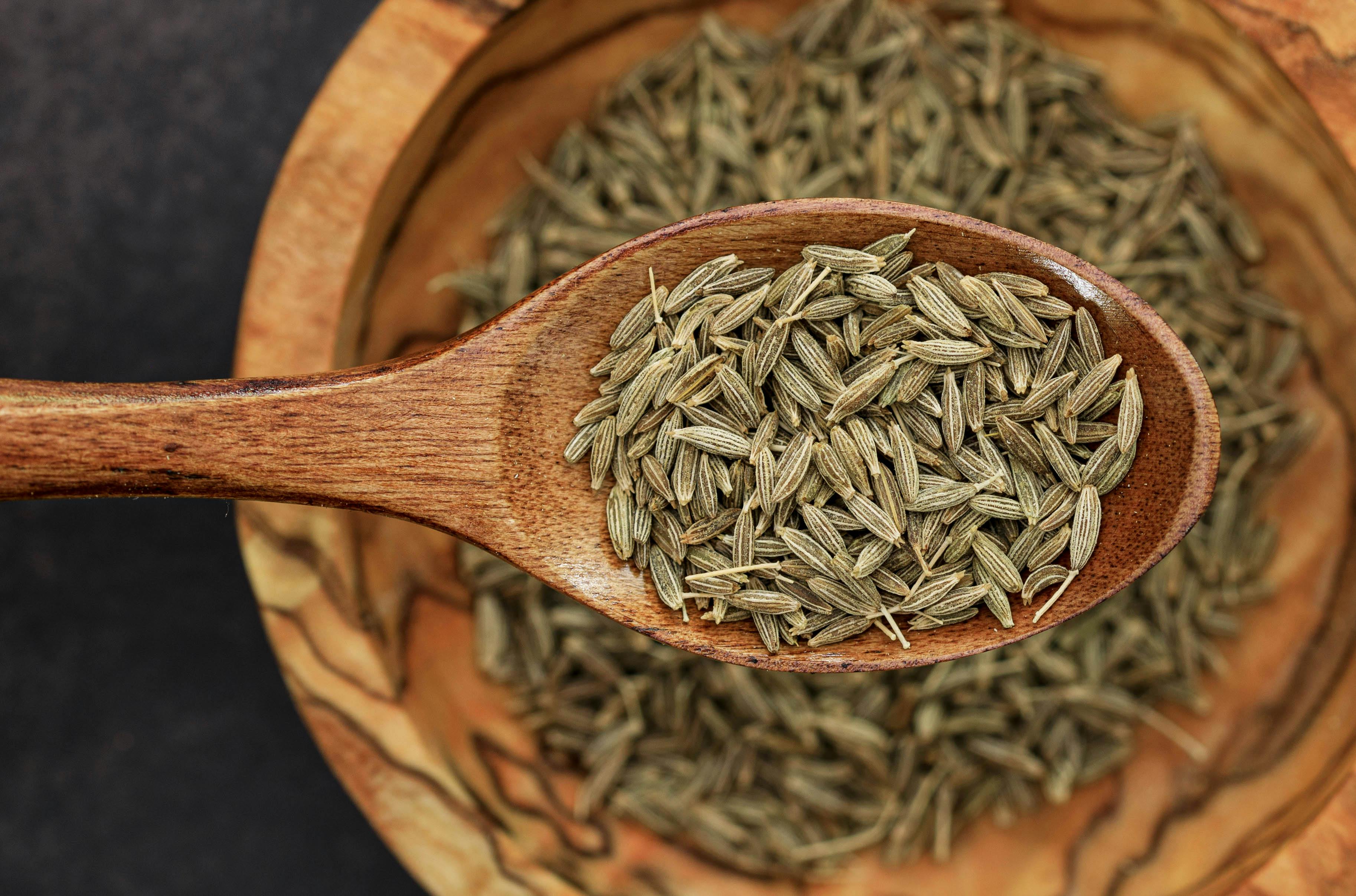
Cumin is a small annual herb (30-50 cm) of the parsley family. It has slender, branching stems, pink or white flowers, and produces small boat-shaped seeds with longitudinal ridges. The seeds contain ~5% essential oil rich in cuminaldehyde.
Origin & History
Originated in the eastern Mediterranean and western Asia, with archaeological evidence from Syria dating to 2nd millennium BCE. Mentioned in the Bible and Egyptian Ebers Papyrus. Spread throughout Asia by trade and became central to Indian, Mexican, and North African cuisines.
Nutritional Profile
Per 100g
Key nutrients: Exceptional source of iron (66mg/100g — 368% RDI), manganese, magnesium and calcium.
Evidence-Based Health Benefits
Stimulates digestive enzymes and increases bile from the liver, speeding up digestion.
A single teaspoon provides nearly 20% of daily iron needs — useful for anemia.
Studies show jeera water improves metabolism and reduces body fat in overweight women.
Helps regulate blood glucose in diabetics in multiple randomized trials.
Cumin's essential oils inhibit foodborne pathogens including E. coli.
Known as Jiraka in Ayurveda — pacifies Vata and Kapha, mildly increases Pitta. Considered a 'Deepana' (appetizer) and 'Pachana' (digestive). Used to treat indigestion, IBS, lactation issues and morning sickness. Jeera water on empty stomach is a classic Ayurvedic detox.
Recipes Featuring This Spice
Basmati rice tempered with whole cumin and ghee.
Carrots roasted with olive oil, cumin, and lemon.
Cumin seeds soaked overnight in water — drink in morning.
Safety & Precautions
300-600 mg of cumin extract daily, or 1-2 teaspoons of seeds. Up to 3 teaspoons in cooked food is safe.
Generally very safe. May lower blood sugar — diabetics should monitor. Large medicinal doses can cause heartburn or heavy menstrual flow.
May enhance effect of diabetes medications. Could interact with blood thinners due to mild anticoagulant action.
Storage & Buying Guide
Whole seeds: airtight container, cool dark place — last up to 3 years. Ground cumin: 6 months. Toast just before grinding for maximum aroma.
Look for plump, brown-green seeds with intense aroma when crushed. Avoid pale or odorless seeds. Indian and Iranian cumin are most aromatic.
Did You Know?
Cumin was used as currency in medieval Europe to pay rent and taxes.
Ancient Egyptians used cumin in the mummification process.
In medieval weddings, brides and grooms carried cumin to symbolize fidelity.
The Greeks kept a container of cumin on the dining table, much like pepper today.
Frequently Asked Questions
What's the difference between cumin and caraway?
Caraway is smaller, darker, and has an anise-like flavor; cumin is earthier and warmer.
Can I substitute ground cumin for whole?
Yes — use ¾ tsp ground for every 1 tsp whole, but flavor is less robust.
Is jeera water safe daily?
Yes, 1 cup of jeera water on empty stomach is a traditional safe practice.
Related Spices
Community Reviews
Share your Cumin experience
Loading reviews...