Names Around the World
How this spice is known in major languages
Botanical Information
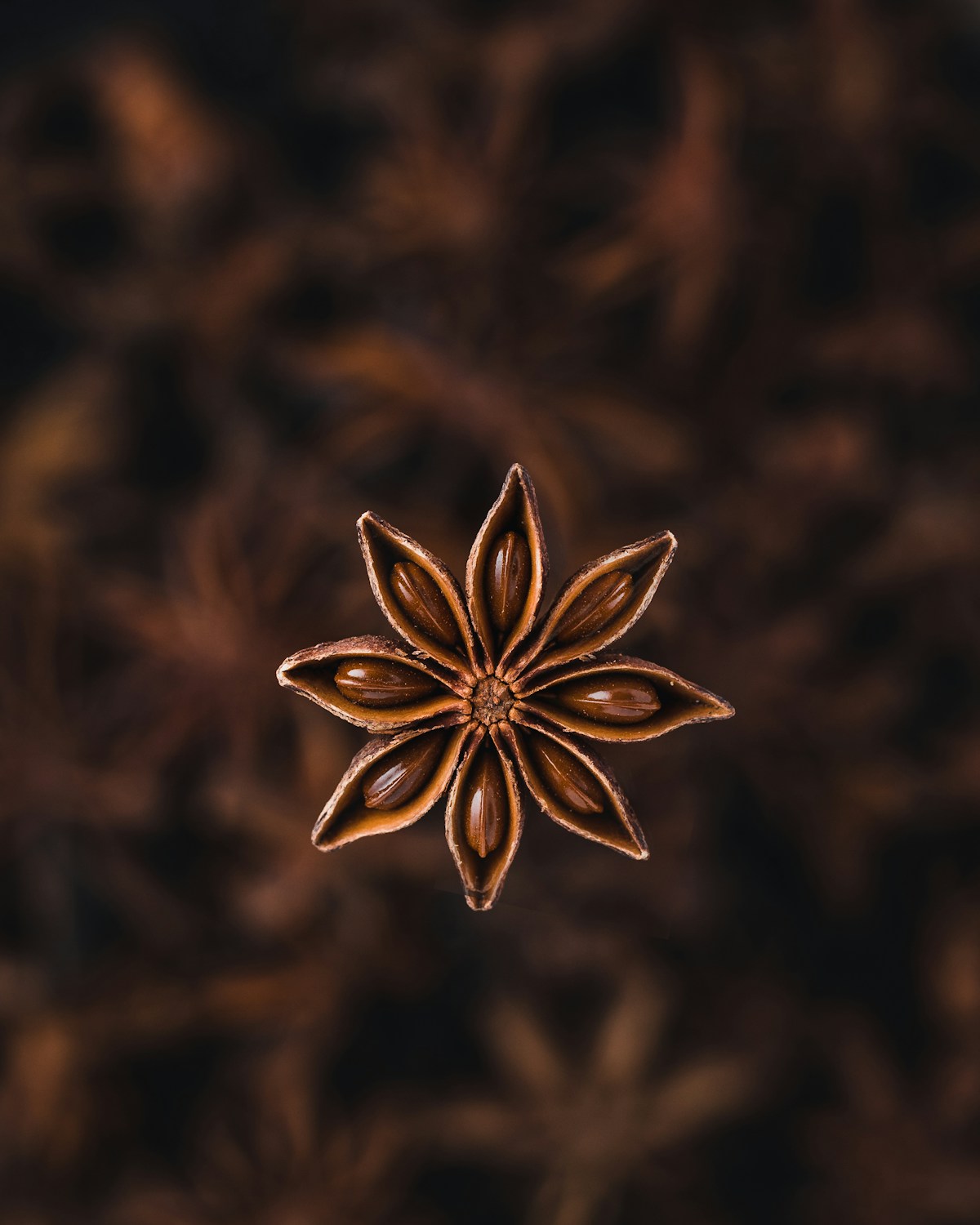
Star anise is the dried fruit of Illicium verum, an evergreen tree native to southern China and Vietnam. The 8-pointed star-shaped pods are picked unripe and sun-dried. Anethole is the main flavor compound — same as fennel and anise — but stronger.
Origin & History
Native to southern China and Vietnam, used in Chinese cuisine for over 3,000 years. Reached Europe in the 17th century via Russia and Asia. Today, China produces 80% of world's star anise.
Nutritional Profile
Per 100g
Key nutrients: Anethole, shikimic acid (used in Tamiflu synthesis), iron, calcium.
Evidence-Based Health Benefits
Shikimic acid from star anise is the starting material for Tamiflu (oseltamivir).
Soothes indigestion, gas, and bloating; chewed after Chinese meals.
Anethole and other compounds inhibit common pathogens.
Mild sedative; star anise tea before bed is a Chinese tradition.
Used in syrups for cough and bronchitis.
Takkola is heating, pungent-sweet, balances Vata and Kapha. Used in Ayurveda for digestive complaints and respiratory issues. Often combined with cardamom and ginger in formulations.
Recipes Featuring This Spice
Beef bone broth simmered with star anise, cinnamon, and clove.
Pork belly slowly cooked in soy, sugar, and star anise.
Apple cider warmed with star anise, cinnamon, orange peel.
Safety & Precautions
1-2 pods per dish, removed before serving. Limit to occasional therapeutic use.
Chinese star anise (Illicium verum) is safe. Japanese star anise (I. anisatum) is TOXIC — sometimes adulterates supplies. Buy from reputable sources.
Hormone-sensitive conditions, blood thinners (mild).
Storage & Buying Guide
Whole pods: 1-2 years airtight, away from light. Lose aroma when broken or ground.
Look for fully formed 8-point pods with intact seeds. Should smell strongly licorice-sweet. Avoid broken, dusty, or musty lots. Verify supplier — Japanese star anise can be lethal.
Did You Know?
Tamiflu (flu antiviral) is synthesized from shikimic acid extracted from star anise.
The 2005 bird flu outbreak caused a global star anise shortage as Tamiflu production surged.
Star anise is one of the few spices whose shape is its trademark.
China produces over 80% of the world's star anise.
Frequently Asked Questions
Star anise vs anise?
Different plants but share anethole. Star anise is stronger, woodier, with a distinct 8-point shape.
Is star anise the same as Japanese star anise?
No! Chinese (Illicium verum) is safe and culinary. Japanese (I. anisatum) is toxic. Always buy from trusted brands.
Can I use star anise in baking?
Yes — works beautifully in mulled wine, apple desserts, and spiced cookies. Use sparingly.
Related Spices

Community Reviews
Share your Star Anise experience
Loading reviews...