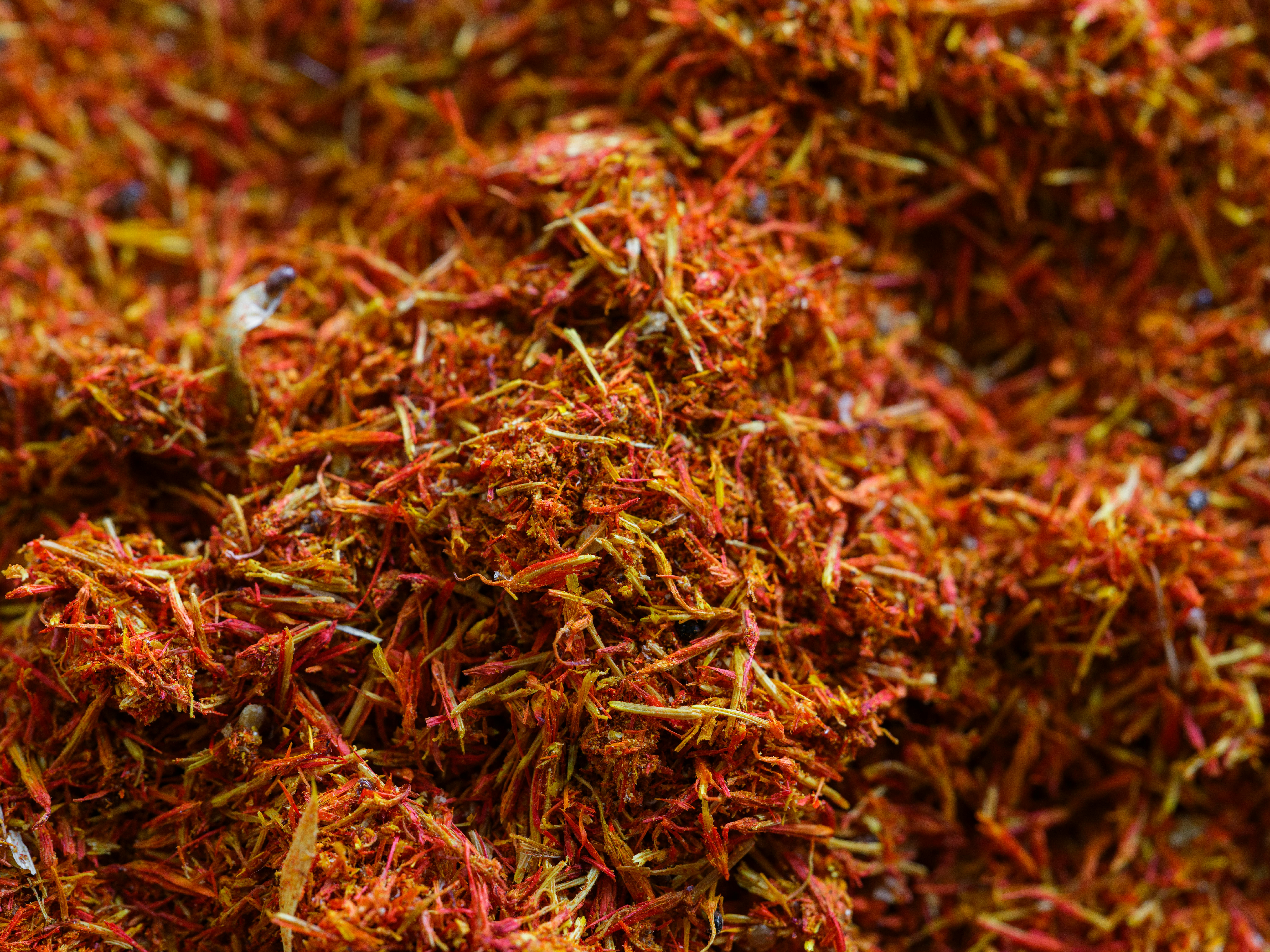
Hold a single thread of saffron between your fingers. Crush it gently — a deep, hay-honey aroma rises. Now consider: that thread, and two others just like it, came from a single purple flower harvested by hand at dawn before the sun hit it. It took 50,000 such flowers to make just one ounce of what's in your palm.
This is saffron — the world's most precious spice. And here's why it's still worth every penny.
The Origin Story
Saffron isn't a leaf, a seed, or a bark. It's the stigma — the female reproductive part — of Crocus sativus, a purple autumn flower native to Persia. Each flower produces exactly three crimson stigmas. The window for harvest is brief: pickers wake before sunrise during a 3-week bloom each October, hand-separate every stigma, and dry them within hours to prevent loss of aroma.
The math: 150,000 flowers × 3 stigmas each = ~450,000 threads = 1 kilo of saffron. The labor alone is 400 hours.
A Spice Older Than History
Saffron threads have been found in 50,000-year-old Stone Age cave paintings. The Greeks painted saffron-bathed goddesses in 1,500 BCE Minoan frescoes at Akrotiri. Cleopatra reportedly bathed in saffron-infused milk to prepare her skin for suitors.
In Persian cuisine, saffron has been central since the Achaemenid Empire (550 BCE). In Spain, the Moors introduced it in the 8th century — and Spanish paella became unimaginable without it. In Kashmir, where the best saffron in the world is grown, the harvest is a community festival.
The Modern Science
Saffron isn't just a culinary luxury. Three of its compounds — crocin, crocetin, and safranal — have been the focus of clinical research for two decades.
Depression: A 2019 meta-analysis of 21 randomized trials showed 30mg of saffron daily matched fluoxetine (Prozac) for mild-to-moderate depression, without sexual side effects.
PMS: 30mg daily for two cycles significantly reduced PMS symptoms in a 2008 trial.
Memory & Alzheimer's: Saffron extract showed effects comparable to donepezil in mild Alzheimer's patients.
Eye health: Multiple studies show saffron extract slows progression of age-related macular degeneration.
For a spice you use a pinch at a time, that's an extraordinary range of evidence.
How to Use Real Saffron
The cardinal rule: never just sprinkle. Always bloom.
- Place 10-15 threads in a small bowl.
- Add 2 tablespoons of warm (not boiling) water or milk.
- Let sit 10-15 minutes. The liquid turns deep gold.
- Add to your dish in the last minutes of cooking, along with the bloom liquid.
For best aroma, gently crush threads between your fingertips before blooming.
How to Spot Fake Saffron
Saffron is the most-adulterated spice in the world. Common fakes:
- Safflower ("Mexican saffron"): cheaper, gives color but no aroma.
- Marigold petals: lots of color, no flavor.
- Dyed corn silk: visually similar but worthless.
Real saffron test: Drop a few threads in warm water. Real saffron releases color slowly (5-15 min) and the threads stay intact and remain red. Fakes bleed color instantly or the water turns red while threads dissolve.
Also: real saffron costs $5-15 per gram. If it's cheaper, it's almost certainly cut.
What Country Has the Best Saffron?
Three top origins:
- Iran — produces 90% of world saffron. "Sargol" grade is all-red threads, top quality.
- Kashmir, India — Pampore region. Often considered the most aromatic in the world, with thicker threads. Limited supply.
- Spain — La Mancha. Excellent quality, often slightly milder than Iranian.
Recipes That Justify the Splurge
Three dishes where saffron is the soul:
- Persian Tahdig — crispy rice with saffron, the highlight of any Persian meal.
- Spanish Paella Valenciana — chicken, rabbit, beans, and the golden glow only saffron provides.
- Indian Kesari Bhaat or Kulfi — saffron-pistachio ice cream that tastes like memory.
Is It Worth It?
A 1-gram tin costs $5-15 and will last most home cooks a year. That works out to about 30 cents per dish. For the most flavor-impactful, history-laden, scientifically-validated spice on Earth, that's a bargain.
Buy a little. Bloom it carefully. Cook with intention. You're tasting the same thread of human history that flavored a Persian king's rice, a Spanish queen's paella, and a Kashmiri grandmother's wedding feast.
Some things really are worth their weight in gold.