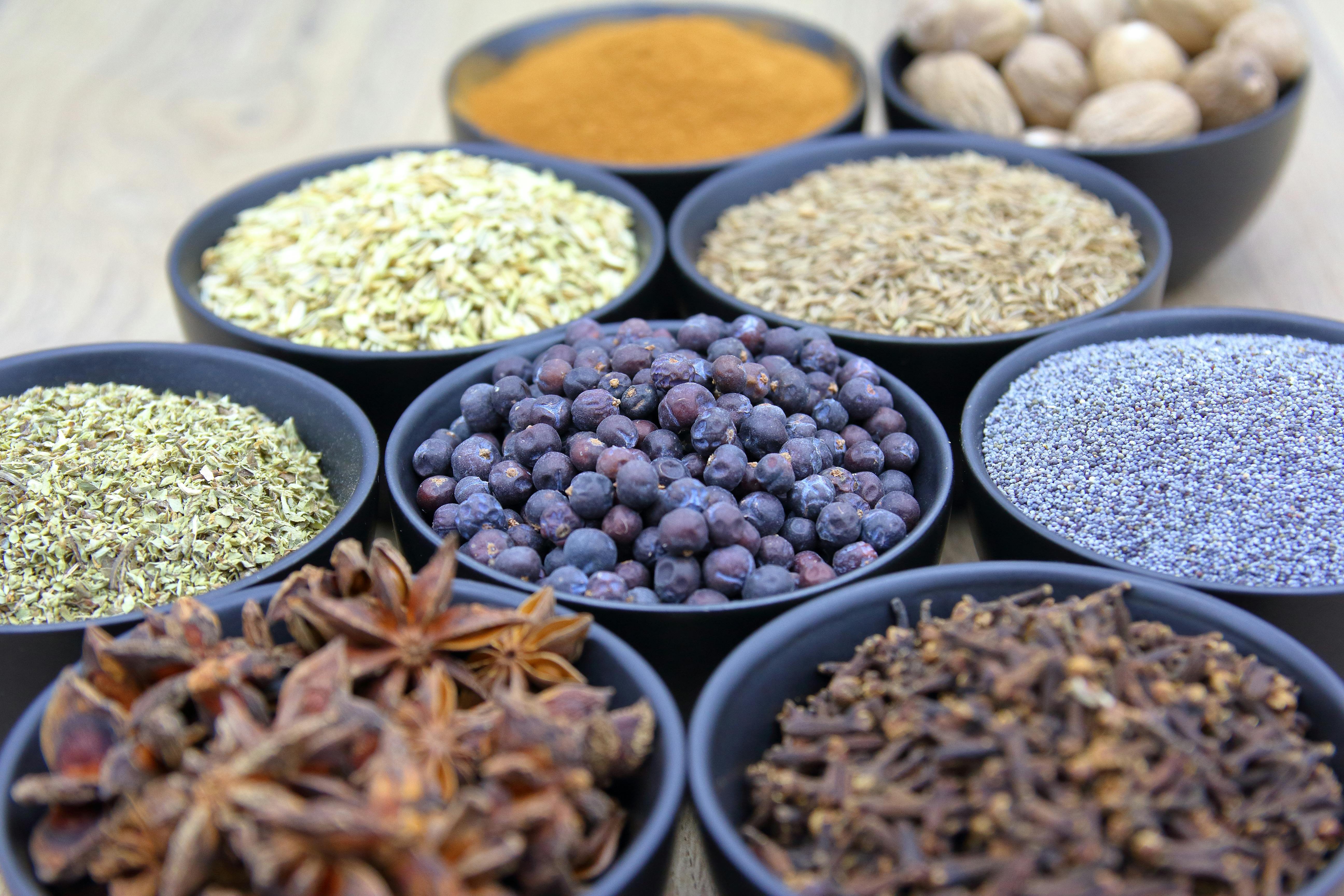
In Ayurveda, digestion isn't just biology — it's the foundation of health. Every classical text spends pages on Agni (digestive fire) and the spices that kindle, balance, or quench it. The good news: most of these spices are already in your kitchen.
What Ayurveda Means by "Agni"
Agni is the metabolic fire that transforms food into energy and tissue. Strong Agni means clear digestion, regular elimination, and bright energy. Weak Agni means bloating, gas, lethargy, brain fog, and toxin buildup ("Ama").
The right spices act as "Deepana" (kindlers) and "Pachana" (digestives) — heating your gut just enough to process food efficiently.
The Big Three: Trikatu
Ayurveda's classical formulation "Trikatu" — meaning "three pungents" — combines black pepper, long pepper, and dry ginger. It's the original digestive primer. A pinch of trikatu before meals ignites Agni and improves nutrient absorption.
Modern note: Studies confirm piperine (from black pepper) increases nutrient bioavailability by 30-2000% depending on the compound.
Cumin (Jeera): The Daily Detox
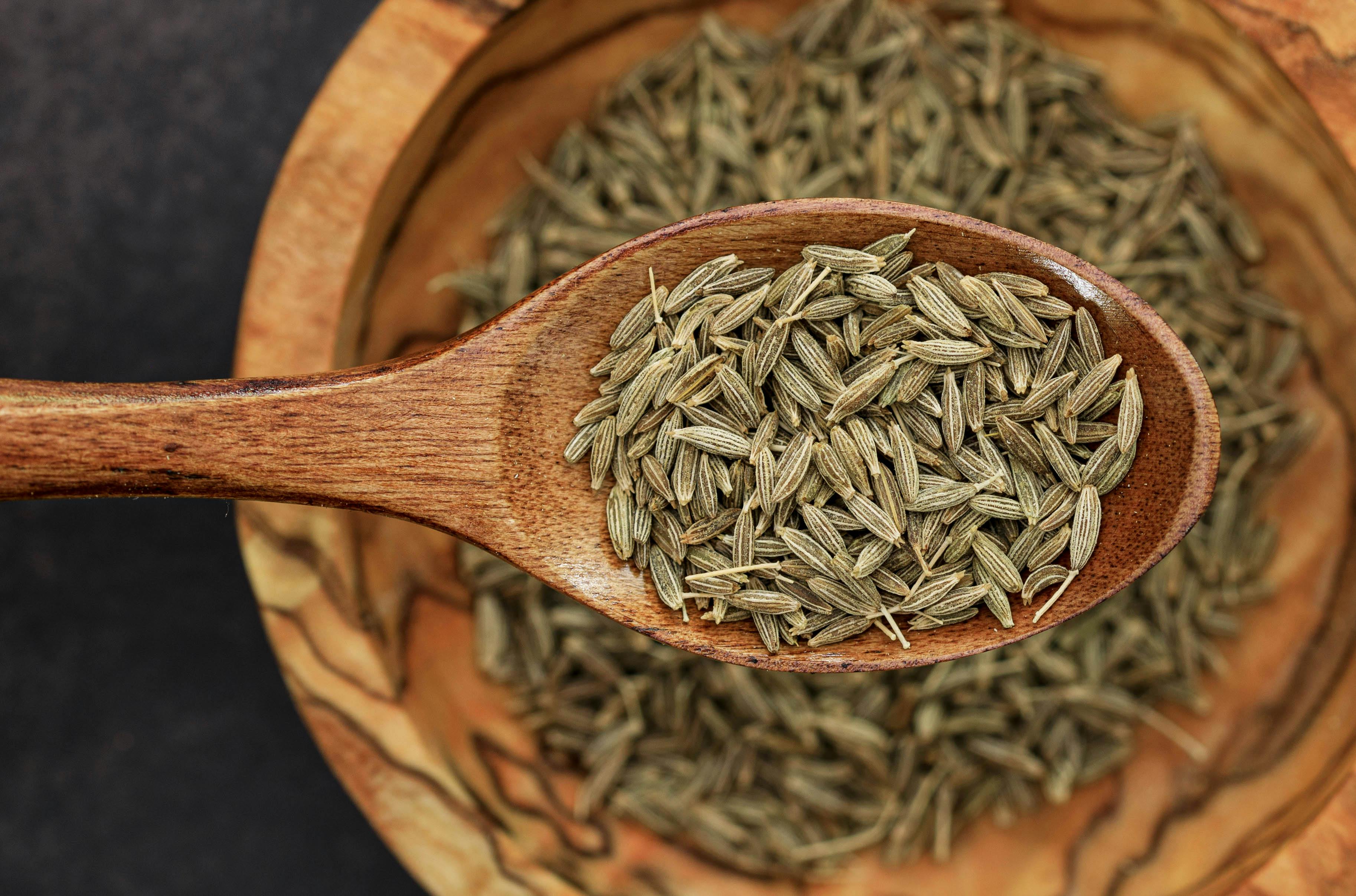
Cumin is a "Tridoshic" digestive — balancing Vata, Pitta, and Kapha. Jeera water (1 tsp seeds soaked overnight in a cup of water, drunk in the morning) is the most prescribed Ayurvedic detox routine.
What it does: Stimulates digestive enzymes, reduces bloating, calms IBS-like symptoms.
Fennel (Saunf): The Cooling Soother
Fennel seeds, served as "mukhwas" after restaurant meals, aren't just for fresh breath. Anethole, fennel's main compound, relaxes intestinal smooth muscle and reduces bloating in under an hour.
Best for: Pitta types who get acidity, heartburn, and inflammation-driven indigestion.
Ajwain (Carom): The Heavy-Meal Hero
Ajwain's thymol is one of the most powerful natural digestive enzymes on Earth. A pinch of ajwain water cures the heaviest meal-induced bloating in 10-15 minutes.
Best for: Kapha types and after rich, oily, or hard-to-digest meals (lentils, fried foods).
Asafoetida (Hing): The Anti-Gas Magic
Asafoetida is non-negotiable in Indian lentil cooking — for one reason: it eliminates the gas-producing compounds in legumes. Just a tiny pinch tempered in hot oil completely changes how you feel after a bean-heavy meal.
Best for: Anyone who avoids beans due to gas. Jain and Brahmin traditions also use hing as a garlic-onion substitute.
Ginger (Adrak): The Universal Medicine
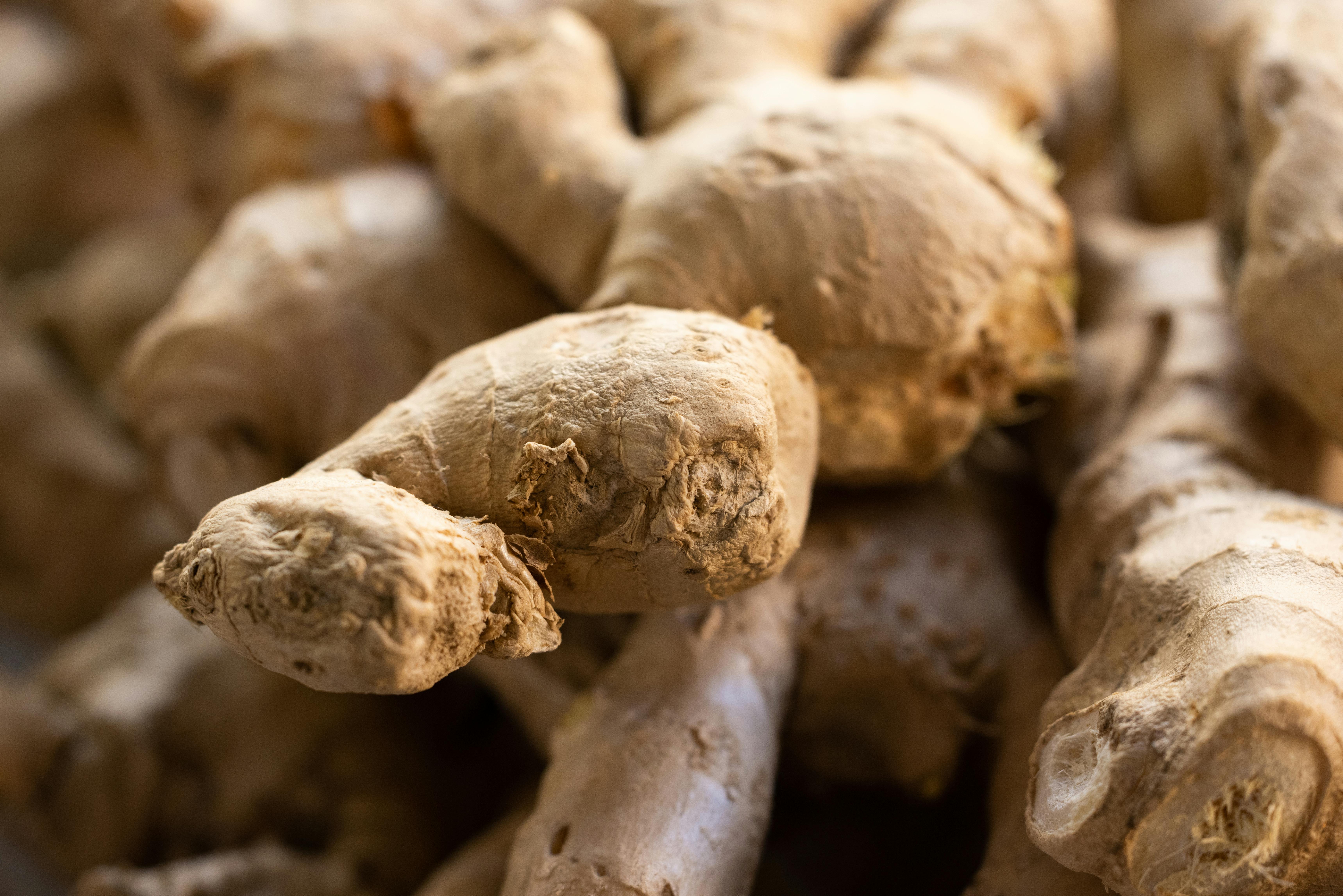
Ginger is called "Vishwabheshaja" — universal medicine — in Sanskrit. Fresh ginger is light and Vata-pacifying; dry ginger (sonth) is heavier and Kapha-reducing.
Classic remedy: Slice of ginger + pinch of rock salt + lemon juice before meals → instant Agni boost.
Fenugreek (Methi): The Sluggish-Gut Fix
Fenugreek seeds soaked overnight, eaten in the morning, are Ayurveda's prescription for chronic sluggish digestion, constipation, and high blood sugar. The soluble fiber also feeds beneficial gut bacteria.
A Simple Daily Routine
Try this for 14 days:
Morning: Glass of warm water with grated ginger and lemon.
Before each meal: Pinch of cumin, coriander, fennel blend ("CCF tea") in hot water.
With heavier meals: Pinch of ajwain or hing in the tadka (tempering).
After dinner: Roasted fennel + cumin seeds with rock candy as mukhwas.
You'll notice less bloating, better elimination, and more even energy within a week. That's not magic — that's 5,000 years of empirical food science working with your biology.
Consult an Ayurvedic practitioner for personalized guidance, especially if you have chronic gut conditions.